
|
Agli albori del 1900 gli orologiai svizzeri Piccola & Joffrette avviano una attività orologiera. Nel 1913, data delle prime notizie certificate, Eugène Meylan rileva l’azienda cambiandole il nome in La Glycine, ispirandosi ad un secolare albero di glicine che ancora oggi vive nel giardino della sede storica.Meylan continua a produrre movimenti dei più svariati calibri, col grande obiettivo di raggiungere la totale intercambiabilità dei componenti. Questo risultato viene raggiunto negli anni ’20, mettendo a punto tecniche che consentivano di ottenere tolleranze inferiori a un centesimo di millimetro. La sfida successiva è la realizzazione di un meccanismo automatico che gli permette di presentare domanda di brevetto e di produrre i primi modelli del suo Glycine Automatic con riserva di carica di 35 ore; è il 1931 e Meylan passerà alla storia come uno dei pionieri dell’orologio a carica automatica.
1953 - It is now almost 60 years since Sam Glur, then Sales Director of the Biel watchmaking company Glycine, was sitting in the cockpit of a DC4 between Bangkok and Calcutta, listening to the pilots carefully explaining the ideal requirements of a modern frequent-flyer watch. Their wish list included a watch with an automatic movement, a 24-hour display, a second time zone and luminous numerals.
This timeless beauty is powered by a rhodanised automatic movement ETA 2893. Entirely in keeping with the AIRMAN No.1, the watch is only available as a 24-hour watch with two time zones, that is, as a purist design. The beautiful dial is highly rem- iniscent of the 1950s and the unforgettable era of the real pioneers of pilot watches.
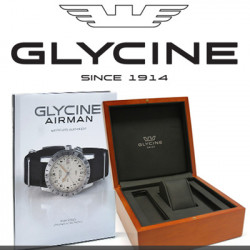
This ageless and alluring timepiece is presented just as it was 60 years ago in a wood- en case true to the original, together with a 1950's style guarantee certificate.
Time is precious and Glycine has succeeded in packaging it exquisitely. (10-12-2012)
|